AI-Enhanced Software Development by Four Ages
Four Ages combines senior engineering talent with AI-assisted workflows to ensure faster project delivery, enhanced cost-effectiveness, and reduced engineering overhead.
Dedicated AI-Augmented Teams
Senior Engineers
High-Impact Delivery










What Do Clients Say About AI-Driven Software Development at Four Ages?
Our AI-enhanced engineering teams have already helped 50+ businesses to achieve their objectives faster and with more effective results. We take on complex projects and commit to meeting the highest quality standards.
High-Performance Teams for AI Augmented Software Engineering
Instead of large, role-heavy teams, we offer experts who understand the full stack from model selection and inference latency to data pipeline architecture.






Why AI-Enhanced Engineering Teams Deliver Better Results in Accelerated Software Development
In our solutions, we combine senior engineers, modular teams, and AI-enhanced workflows to enable accelerated software delivery.

Senior-First Execution
Senior Engineers Drive Every Decision
No layers of junior experts or communication overhead. At Four Ages, you can hire remote developers who move fast, make smarter architectural choices, and cut rework early.
AI-Enhanced Workflows
AI Accelerates Development Across the Lifecycle
AI supports coding, testing, documentation, and research — reducing repetitive work and increasing output without increasing team size.


Modular Team Structure
Teams are Built Around your Problem — Not Fixed Roles
Instead of rigid team structures, we assemble focused modules of engineers. This reduces dependencies, speeds up execution, and avoids unnecessary overhead.
Outcome-Driven Delivery
Focus on Results, Not Headcount
We deliver faster, higher-quality software that scales long-term — without bloated headcount.

The Key to Building High-Performance Software
A structured approach to building scalable systems. We know when AI is the right tool and when it isn't. That judgment is what protects your system long-term.
Clear Ownership from Day One
Experienced engineers make key decisions from day one — reducing uncertainty, avoiding rework, and keeping the system aligned with long-term goals.
AI-Enhanced Execution
We inject AI tools into coding, debugging, and documentation phases. This cuts down routine tasks by up to 30-40%, allowing senior devs to focus solely on your business logic
Architecture That Scales
We prioritize scalability, performance, and maintainability from the beginning — avoiding costly rebuilds later.
Continuous Delivery Without Chaos
High velocity engineering that maintains quality: Streamlined handoffs and tight feedback loops enable faster, reliable iterations.
Secure AI Usage
Your intellectual property and repository data are never used to train public AI models. All operations are processed in secure, isolated environments complying with GDPR and ISO 27001.
Measurable Outcomes
We optimize for delivery speed, system quality, and long-term efficiency — not the number of engineers or hours billed.
How to Hire Dedicated Developers
A streamlined onboarding process of verified senior engineers from our pool of candidates.
Real Outcomes Produced by Four Ages

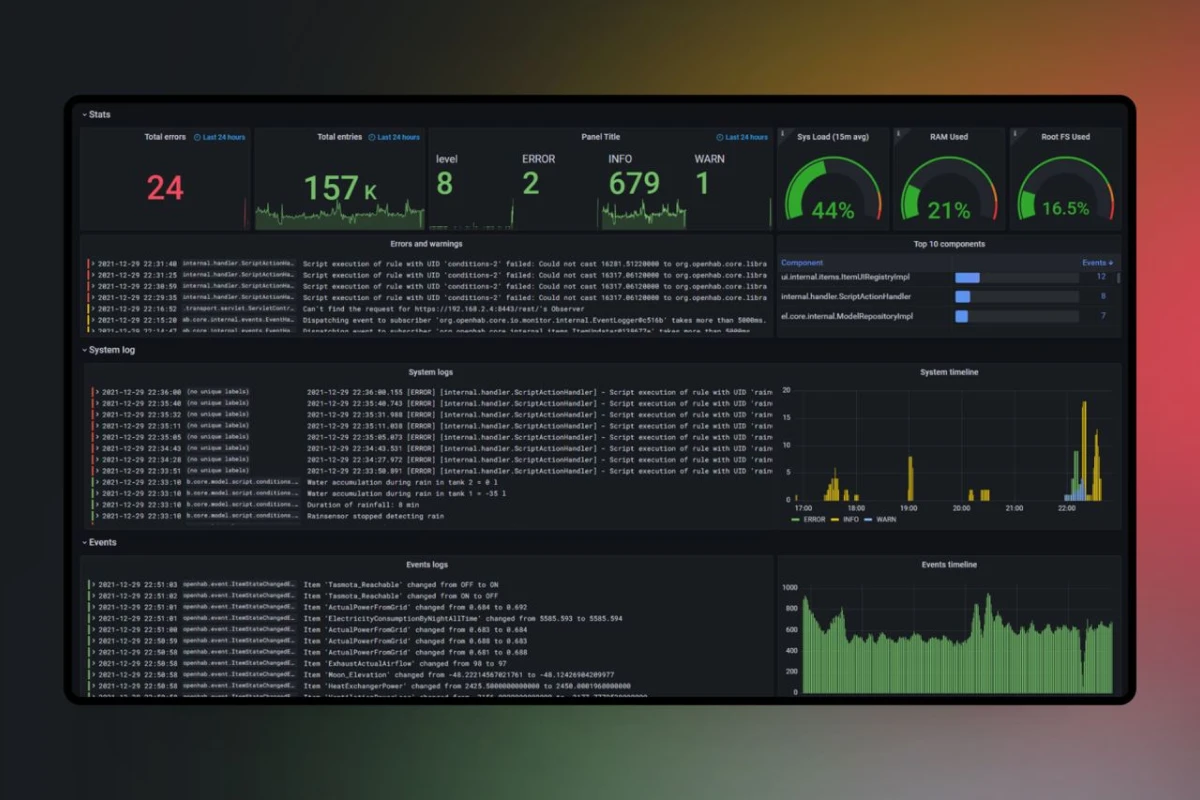
Energy Management with IoT
We built three integrated energy management products with seamless smart home device connectivity.
High-Load API Distribution Hub
Full solution built from scratch — microservices, front-end, back-end, CI/CD, and AWS infrastructure.
Ready to Start?
Deploy AI engineers, build production AI systems, and upskill your teams to scale enterprise AI.

FAQ
Questions? We're glad you asked.
At Four Ages, AI is not a replacement for thinking; it’s an accelerator. Our senior engineers use AI-powered software and environments for automated unit-testing, rapid prototyping, intelligent debugging, and instant documentation generation. This eliminates boilerplate work and shifts the focus to system architecture.
1. Submit your project ideas or existing system architecture. Four Ages engineers will analyze the scope and create the necessary artefacts for you. 2. Choose a suitable model of engagement to best align with your budget and timeline expectations. 3. All engineers will be selected from our verified talent pool. 4. The project can be managed by your project manager or by our certified PMs. 5. We provide ongoing support and maintenance.
The dedicated development team is a team of developers who work exclusively on your project. According to this model, engineers focus on your specific needs and won’t switch projects. Such teams operate in the same way as in-house teams but help reduce HR overload while also ensuring flexibility in cooperation.
Four Ages builds and scales custom software for enterprise companies and funded startups. We work across energy, event tech, healthcare, automotive and other regulated, domain-heavy industries. Our teams build on AWS, Microsoft Azure, Google Cloud and Atlassian, augmented with frontier AI tooling (Claude Code, Gemini, Grok, Perplexity). Because we pair platform engineering with deep domain context, solutions are tuned to the specific market they ship into rather than delivered as generic builds.
A dedicated, AI-augmented team of 3–4 senior engineers typically costs $20,000–$30,000/month, with the first production deployment in 4–8 weeks. It's a predictable monthly retainer with no recruitment, benefits or bench overhead — you scale capacity up or down instead of hiring and firing full-time staff. Every team is senior-led, which is what turns AI speed into shipped, maintainable systems.
No — AI accelerates engineers, it does not replace the judgment that ships production systems. AI reliably generates code, but a senior engineer is what catches the security flaws, architecture mistakes and edge cases it misses. IBM CEO Arvind Krishna estimates AI writes 20–30% of code, not all of it, and DORA's research found ~30% of developers still don't fully trust AI output — that skepticism is load-bearing. Four Ages keeps a human review bar on every line, which is exactly why our model is senior-led rather than AI-only.
AI-generated code is a real risk when it ships unreviewed — which is why at Four Ages it passes the same review bar as human-written code, no exceptions. Veracode's 2025 analysis found 45% of AI-generated code contains security vulnerabilities, with roughly 2.7× the vulnerability density of human-written code, and IT Pro calls the core problem the “illusion of correctness”: AI code looks production-ready while quietly introducing flaws. Senior review, security scanning and tests are how we capture AI's speed without inheriting its risk.
AI is shifting outsourcing from billing hours and headcount to delivering outcomes, and it raises — not lowers — the premium on senior oversight. McKinsey found AI time savings drop below 10% on complex tasks, and that junior developers actually get slower with AI tools. The agencies that win with AI are senior-led, because experience is what converts AI's raw speed into working software. That's the gap Four Ages is built to close.
Yes for well-defined work, marginally for complex work — and the research is consistent about the gap. GitHub's 2023 study measured 55% faster completion on well-scoped tasks, the Stanford AI Index 2025 puts the average gain near 26%, and McKinsey finds it falls below 10% on genuinely complex work. Across our own projects, Four Ages consistently measures a 30–40% reduction in routine engineering work. The variable that decides where you land in that range is engineering seniority.
You're paying for architecture, judgment and accountability — not keystrokes. AI can generate code cheaply, but Veracode (2025) found 45% of it ships with vulnerabilities, and unreviewed AI output is where the rework, security incidents and hidden costs accumulate. Your rate buys senior engineers who design the system, review and secure the AI's output, and own the result end to end. The price reflects shipped, production-grade outcomes — the part AI can't do alone.
You own 100% of the IP, including AI-assisted code, and it transfers to you on payment with no residual claim. Because the legal status of AI-generated code is still evolving, we keep ownership unambiguous in the contract and commit all source, infrastructure scripts and documentation to a client-controlled repository from day one — so what you're paying for is always in your hands, not ours.
No. Four Ages uses enterprise-tier AI tooling with zero-retention, no-training terms — for example, Anthropic's Claude does not train on customer data. This is the opposite of consumer-tier AI tools, where proprietary code can be retained or used for training by default. Your codebase, secrets and business logic stay inside controlled, contractually protected environments.
Lock-in is prevented by design: your code lives in your repositories and cloud accounts from day one, and knowledge transfer is a continuous, auditable activity — documentation, architecture decision logs and reviews with your team — not a last-day document dump. When you scale down or exit, we run a structured 2–4 week knowledge-transfer handoff so your internal team can take over cleanly. You're never financially trapped into staying.
Choose based on your in-house engineering maturity. A dedicated team (Four Ages's model) fits companies that need product velocity but don't yet have engineering management to direct individual hires — the vendor manages delivery on a predictable monthly retainer. Staff augmentation fits teams that already have their own engineering leadership and just need extra hands in their process. Fixed-price fits a tightly defined, unchanging scope with a clear statement of work. Many companies start with a dedicated team for core product velocity, then move to staff augmentation once they've hired internal leadership.
AI is excellent for prototyping, but production systems need architecture, security and scale that prompt-driven “vibe coding” doesn't provide. Veracode (2025) found 45% of AI-generated code has vulnerabilities, and enterprise teams increasingly cite the “illusion of correctness” — code that looks finished but fails under real load or attack. AI gets you to a demo fast; senior engineers get you to something you can safely run a business on. Four Ages exists to cover exactly that gap.